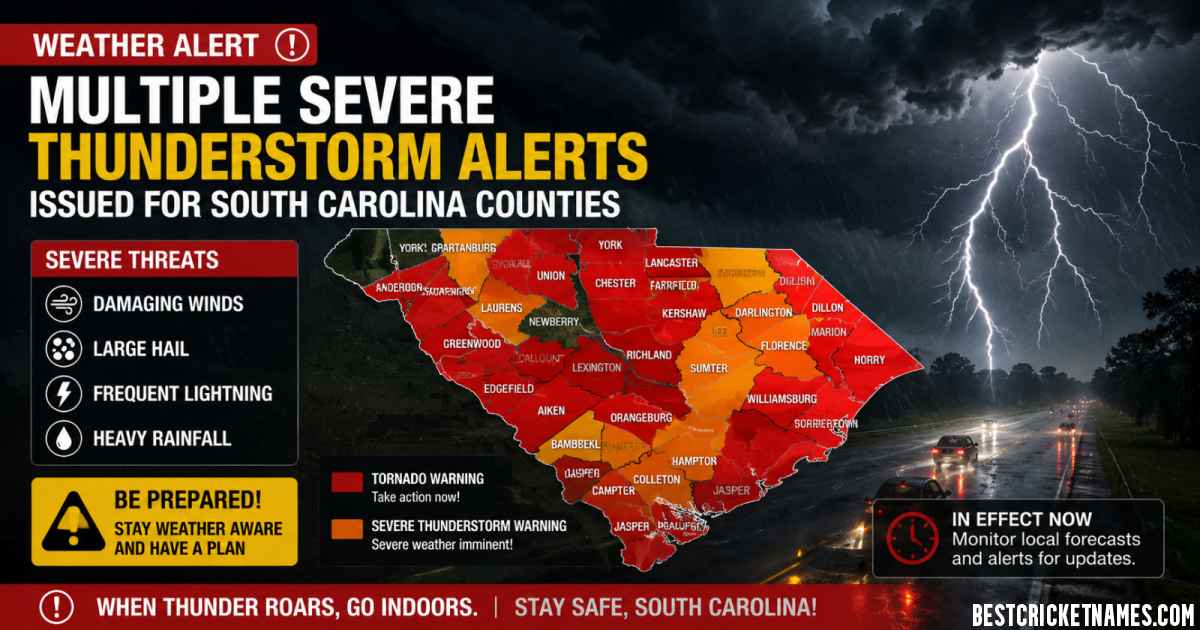
Multiple Severe Thunderstorm Alerts Issued for South Carolina Counties: 2026 Guide to Warnings, Safety & Impact Zones

Introduction
Multiple Severe Thunderstorm Alerts Issued for South Carolina Counties: 2026 Guide to Warnings, Safety & Impact Zones is a guide to help counties know what to expect when a severe thunderstorm warning is issued.
South Carolina has some of the wettest thunderstorm seasons in the southeast part of the United States. The National Weather Service (NWS) often sends out a string of severe thunderstorm WATCHES and WARNINGS in spring and summer in multiple locations across several counties, particularly when the atmosphere is conducive to severe thunderstorms. They issue alerts to warn people of the potential for hazardous weather such as damaging winds, large hail, heavy and dangerous lightning, flash flooding, and sometimes tornadoes.
On June 14, 2026, the National Weather Service in Columbia, SC issued a Severe Thunderstorm Warning for northeastern Barnwell County and later cancelled the warning after storms moved out of the area. This sort of event serves as a reminder of how rapidly weather conditions can shift and of the importance of knowing what the severe weather notifications mean to all South Carolina residents.
This 2026 guide discusses the conditions that lead to severe thunderstorm warnings, which counties are most prone to severe thunderstorms, the warning system, and what you should do when severe thunderstorms are coming.
|
Detail |
Information |
|---|---|
|
Full Name |
Multiple Severe Thunderstorm Alerts Issued for South Carolina Counties |
|
Famous As |
NWS warnings/watches covering multiple SC counties simultaneously during spring/summer 2026 |
|
Issuing Agency |
National Weather Service (NWS) Columbia, SC and NWS Charleston, SC |
|
Recent Example |
Sunday, June 14, 2026 – 5:44 PM EDT: Severe Thunderstorm Warning for northeastern Barnwell County, later cancelled |
|
Alert Types |
Severe Thunderstorm Watch, Severe Thunderstorm Warning, Severe Weather Statement, Marine Weather Statement |
|
Criteria for Warning |
Radar indicated/observed winds 60+ MPH and/or hail 1 inch or larger |
|
Common Counties Listed |
Richland, Lexington, Calhoun, Sumter, Saluda, Edgefield, Aiken, Barnwell, Clarendon, Darlington, Florence, Colleton, Dorchester, Horry, Georgetown |
|
Locations in Warnings |
Columbia, Lexington, West Columbia, Cayce, Irmo, Pine Ridge, Springdale, St. Andrews, Oak Grove, Seven Oaks |
|
Major Highways Impacted |
Interstate 126, I-20, I-26, I-77 between mile markers 1-17, 43-71, 95-116 |
|
Peak Threat Time |
Afternoon to evening – Example: 3:25 PM EDT warning for Midlands |
|
Primary Hazards |
Damaging winds to 60 MPH, hail <0.75 IN to 1+ IN, excessive cloud-to-ground lightning, torrential rainfall, flash flooding |
|
Infrastructure Risk |
Widespread power outages from downed power lines and tree limbs |
|
Travel Impact |
Roads, bridges, overpasses become slick and hazardous; do not drive through flooded roadways |
|
State Response |
State of Emergency declared January 21, 2026 by Governor Henry McMaster for winter storm; activates SC Emergency Operations Plan |
|
Safety Week |
SC Severe Weather and Flood Safety Week: March 8-14, 2026; statewide tornado drill March 11 at 9:00 AM |
|
How to Get Alerts |
NOAA Weather Radio, County CodeRED, Wireless Emergency Alerts, Alert Whiteville, weather apps |
|
NWS Advice |
“If you can hear thunder, you are close enough to be struck by lightning”; seek shelter inside sturdy building away from windows |
|
Marine Alerts |
NWS Wilmington issues Marine Weather Statements for coastal waters Murrells Inlet to South Santee River – winds to 30 knots, small hail |
|
Watch vs Warning |
Watch = conditions favorable; Warning = severe weather occurring/imminent |
|
Annual Average |
South Carolina sees 50-60 thunderstorm days per year; spring is peak season |
|
Famous For |
Multi-county simultaneous alerts; fast-moving storms requiring multiple alert methods |
Discuss what causes severe thunderstorm alerts in South Carolina.
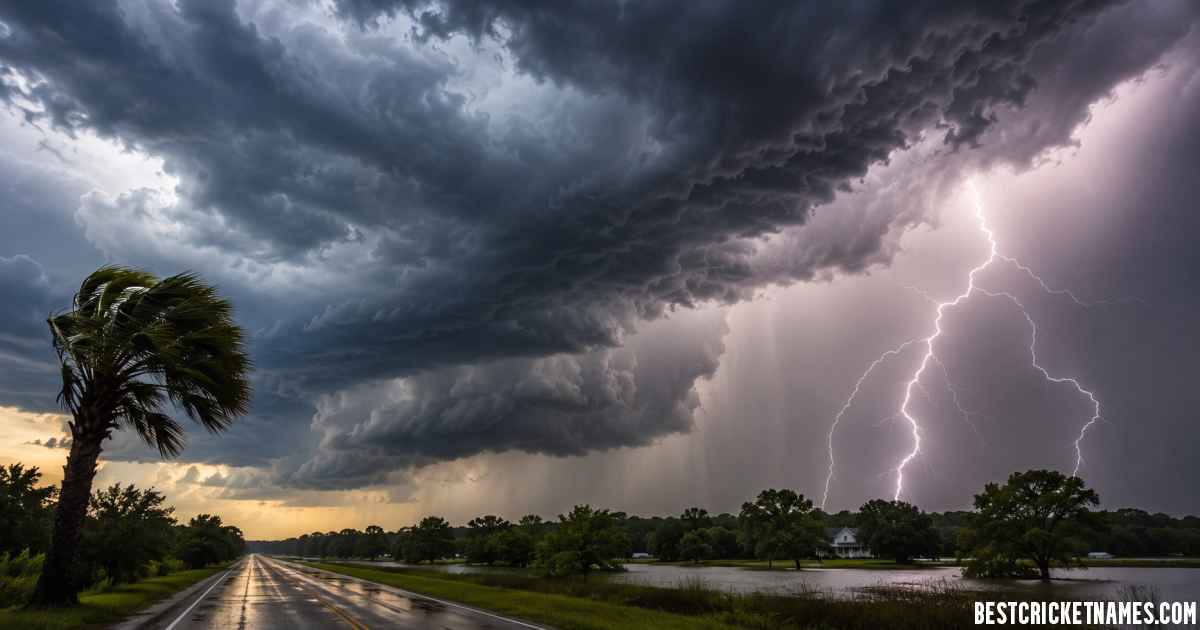
A Severe Thunderstorm WARNING is issued when weather radar shows—or trained storm spotters report—a thunderstorm capable of causing severe weather. By NWS definition, severe storms are those that produce:
- Strong winds in excess of 60 mph
- Hail that falls 1” in size or larger.
- Frequent cloud-to-ground lightning
- Stronger than usual rains that can trigger flash flooding.Intense rain that can bring about flash flooding.
If the NWS issues a warning for counties in South Carolina, the warning will generally provide some details about the specific type of threat. For instance, a warning can read:
- Wind Threat: Maximum wind gusts observed on radar were near 60 MPH.
- Hail Threat: Hail indicated by radar, which may be less than 0.75″ but can be larger.
- Lightning Threat: Excessive Lightning to Ground (CG)
- The flooding threat is due to heavy rain resulting in localized flooding.
Communities, major roads and interstate highways are often listed in weather alerts if they are likely to be affected by severe weather. This local information enables residents to prepare in a fast and effective manner and take action where necessary for their safety.
These are the counties that have the highest frequency of severe thunderstorm alerts.
Some parts of South Carolina are at greater risk for severe weather alerts than others due to their location and climate. Severe thunderstorm watches and warnings are often issued to the following counties:
Midlands Region
- Richland
- Lexington
- Calhoun
- Sumter
- Saluda
- Edgefield
- Fairfield
Central Savannah River Area (CSRA)
- Aiken
- Barnwell
Pee Dee Region
- Clarendon
- Darlington
- Florence
- Dillon
Lowcountry
- Colleton
- Dorchester
- Hampton
- Jasper
Upstate South Carolina
- Greenville
- Laurens
- Greenwood
High impact weather systems frequently impact several counties at once. One such incident occurred on January 22, 2026 when Winter Storm Watch was issued for the counties of McDuffie, Columbia, Richmond, Edgefield, Saluda, Lexington, Richland, Aiken, Sumter and Calhoun. Although it was a winter weather event, it demonstrated how widespread weather alerts can impact large portions of the state at the same time.
Here are some of these examples of multi-county thunderstorm alerts that occurred in 2026.
Here are a few key weather events from 2026 that show the extreme weather warnings that are issued and updated throughout the state.
June 14, 2026: Barnwell County Warning Cancelled
The NWS Columbia office issued a Severe Thunderstorm warning for northeastern Barnwell County at 5:44 PM EDT. But it was later cancelled the warning because:
“The storms which prompted the warning have moved out of the warned area.”
It illustrates the dynamic nature of thunderstorms and the need for people to stay tuned to weather forecasts even after a warning.
March 12, 2026: Severe Thunderstorm Watch for Northeastern Areas
A Severe Thunderstorm Watch was in effect until 5:00 PM for counties:
- Robeson
- Bladen
- Columbus
- Inland Pender
- Inland New Hanover
- Inland Brunswick
Other counties in South Carolina were also considered as meteorologists warned of:
- Damaging winds
- Large hail
- Possible isolated tornadoes
The Marine Warnings are the shoreline warnings issued by the NCE for the South Carolina coast.
Inland communities are not spared of severe weather. A Marine Weather Statement was issued by the NWS Wilmington office for those coastal waters between Murrells Inlet and South Santee River. The warning was issued due to the development of thunderstorms with the potential to produce:
- Up to 30 knots winds.
- Small hail
- Winds and waves are dangerous for boaters.
These alerts directly affected coastal counties of Georgetown and Horry.
Students will understand the difference between Alert Levels: Watch, Warning and Statement.
Understanding the different types of weather alerts is one of the most critical factors in weather preparedness.
| Alert Type | Meaning | Action Required |
|---|---|---|
| Severe Thunderstorm WATCH | Severe storm conditions are possible | Be weather aware and stay tuned for watches and warnings |
| Severe Thunderstorm WARNING | Severe weather has already occurred or is about to occur in this area, seek shelter now! | |
| Severe Weather Statement | Update, extend, or cancel a severe weather statement | Monitor conditions |
Some of those warnings have included cities, like Columbia, Lexington, Cayce, West Columbia, and Irmo, where radar showed storms with the potential to produce 60 MPH winds.
If a warning is issued, people should stay indoors and refrain from unnecessary travel.
In this category, the tornado and hail-producing thunderstorms had the greatest impact.
Nearly all aspects of daily life can be impacted by severe thunderstorms. The National Weather Service often identifies particular threats in their warnings.
Power outages and infrastructure damage.Power outages and infrastructure damage.
Strong thunderstorm winds may down:
- Trees
- Power lines
- Utility poles
Numerous warnings include the possibility of large areas suffering from severe, prolonged power failures, especially if the storm heads to a heavily populated area.
Travel Hazards
Severe weather can make driving conditions hazardous. NWS warnings have warned of hazards along major highways that include:
- Interstate 20
- Interstate 26
- Interstate 77
- Interstate 126
Rain may cause roads to be slippery, and strong winds can make driving difficult, particularly for trucks and SUVs.
Lightning Dangers
The National Weather Service always warns:
When you can hear thunder, you are within striking distance of lightning.
Lightning is one of the biggest weather-related killers in the U.S. and shouldn’t be taken lightly.
How officials in South Carolina will respond to multiple weather alerts.
South Carolina is extremely proactive with severe weather management.
Governor Henry McMaster declared a State of Emergency on January 21, 2026 for a significant winter storm. The declaration triggered the South Carolina Emergency Operations Plan, which granted the following:
- National Guard activation
- Emergency resource deployment
- Temporary suspension of trucking restrictions to enable deliveries to be made faster
SCEMD also maintains a strong partnership with the National Weather Service all year long.
One of the largest preparedness efforts will be South Carolina Severe Weather and Flood Safety Week March 8-14, 2026. The campaign included a statewide tornado drill on March 11 at 9:00 AM, helping residents practice emergency response procedures.
What to do when severe thunderstorms are in the area in 2026.
Emergency managers stress that there is no foolproof way to alert during a rapidly moving storm. Residents should have more than one means of warning.
Some recommended alert systems are:
NOAA Weather Radio
Continuous weather broadcasts and emergency alerts via tone activation.
County CodeRED Systems
Counties have adopted CodeRED for direct notification to their citizens.
Alert Whiteville
A county-wide notification system for Columbus County and the surrounding area.
Wireless Emergency Alerts (WEA)
Should be sent automatically to compatible mobile devices, but is not to be relied upon exclusively.
Weather Apps
Today’s weather apps give users up-to-the-minute radar maps, warnings, and forecasts.
Multiple alerting systems provide multiple avenues to alert you to critical messages if one system is delayed or fails.
Once a severe thunderstorm WARNING is issued, you should:
The National Weather Service suggests these actions when a Severe Thunderstorm WARNING is issued:
- Go to a sturdy building right away.
- Avoid getting near to glass windows and doors.
- Listen to official weather forecasts.
- Have supplies on hand and in your vehicle for emergencies
- Stay out of flooded roads
- Power up cell phones in advance of bad weather.
Marine advisories are important to follow for coastal communities. New and recreational sailors should not get into the water when there are Small Craft Advisories and/or hazardous weather conditions.
2026 Thunderstorm Outlook for South Carolina
Final totals are not yet in from 2026, however, the National Weather Service has forecast further thunderstorm activity into the summer months. Lower 90s temperatures and plenty of moisture means severe storms can be expected.
South Carolina is averaging about 50-60 thunderstorm days per year, primarily in the spring and early summer. The state continues to have a threat for severe storms, flash flooding, lightning and sometimes tornadoes.
Conclusion
In South Carolina, multiple severe thunderstorm alerts are a regular occurrence and necessary for life. These may be a warning from the Barnwell County Warning or a general warning for the region, impacting various counties, and deliver vital information to help save lives and property before, during and after the event. Knowing the difference between a watch, a warning, and a statement, which counties are most often hit, and how and when to get the alerts more than once are vital to safety during hazardous weather. Entering its next round of storms in 2026, the best way to protect yourself from severe thunderstorms is to be weather aware, prepared and informed.


