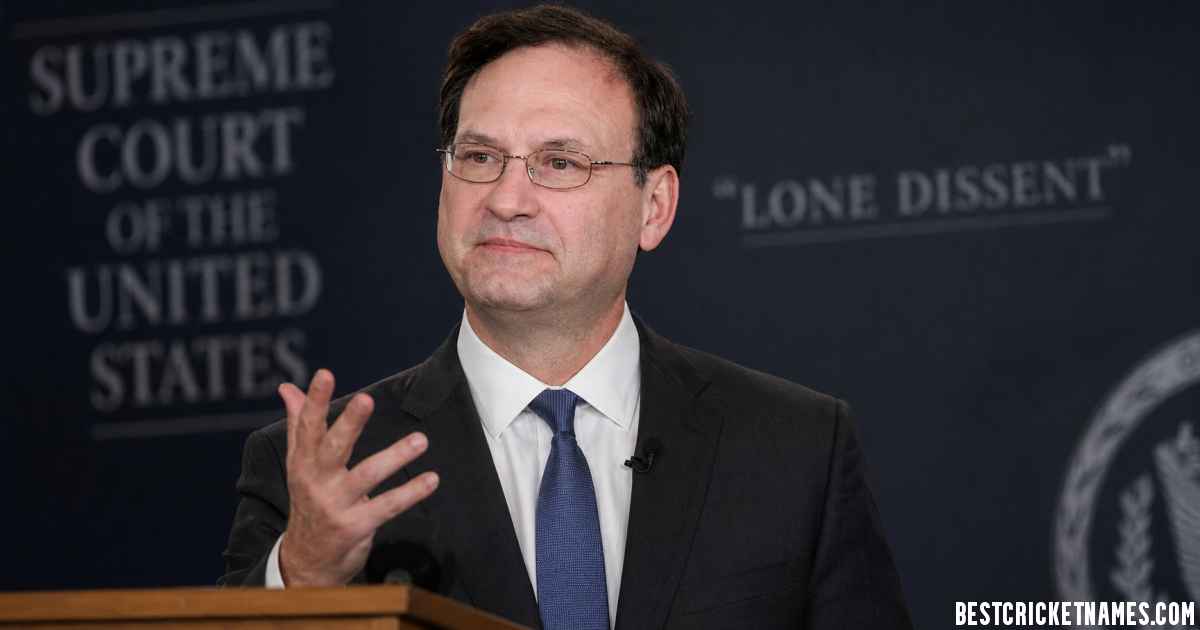
Samuel Alito Lone Dissent: Justice Alito’s Solo Opinions Shaped the Supreme Court

Introduction to Samuel Alito Lone Dissent
Samuel Alito Lone Dissent: That’s one of the most anticipated parts of the U.S. Supreme Court’s 2026 term, and it has been on Samuel Alito’s mind. Justice Alito has long been a member of the conservative side of the bench, but several cases in 2026 showed how he was willing to go against the majority or almost against the entire Court when he thought it had gotten the law or constitutional interpretation wrong.
Alito’s lone opinions have sparked controversy in a variety of areas, such as criminal law and student free speech, voting rights and federal judicial power. While dissents have no impact on the case’s outcome in the instant case, they can also maintain legal arguments that will affect future court, legislative and constitutional discussions.
This guide explores the most important and contentious solo dissents from Justice Samuel Alito’s 2026 term, the legal stakes and insights they provide into his judicial thinking ahead of the 2026 midterm elections.
|
Detail |
Information |
|---|---|
|
Keyword |
samuel alito lone dissent |
|
Full Name |
Samuel Anthony Alito Jr. |
|
Famous As |
U.S. Supreme Court Associate Justice and most frequent solo/lone dissenter on the current Court |
|
Position |
Associate Justice, Supreme Court of the United States |
|
Appointed By |
President George W. Bush |
|
Tenure Start |
January 31, 2006 |
|
Judicial Philosophy |
Originalist and textualist; strong focus on First Amendment, religious liberty, executive power |
|
2024 Term Stats |
9 total opinions – 2 majority, 1 concurrence, 4 other, 0 dissent on merits; 3 dissents from denial of certiorari |
|
2021 Term Stats |
24 total opinions – 6 majority, 5 concurrence, 9 dissent, 1 concurrence/dissent, 3 other |
|
2020 Term Stats |
25 total opinions – 6 majority, 8 concurrence, 9 dissent, 1 concurrence/dissent, 1 other |
|
Lone Dissent #1 |
Snyder v. Phelps (2011) – lone dissent in 8-1 case. Defended military family against Westboro Baptist Church: “Our profound national commitment to free and open debate is not a license for the vicious verbal assault” |
|
Lone Dissent #2 |
United States v. Stevens (2010) – solitary dissent in 8-1 ruling. Argued federal animal cruelty video law was not overbroad |
|
Lone Dissent #3 |
National Review v. Mann – wrote a lone dissent from denial of cert. Said case “presents questions that go to the very heart of the constitutional guarantee of freedom of speech” |
|
Lone Dissent #4 |
Louisiana redistricting 2026 – Alito rips Jackson’s ‘utterly irresponsible’ solo dissent. Called her arguments “baseless and insulting” after Court fast-tracked map changes |
|
Lone Dissent #5 |
Anti-abortion student speech case – lone dissenter from refusal to hear case. Said lower courts “struggled to ascertain” student speech limits |
|
Lone Dissent #6 |
March 25, 2026 supervised-release case – broke with conservative majority, filing lone dissent |
|
Lone Dissent #7 |
Parents Protecting Our Children v. Eau Claire Area School District (2024) – dissented from denial of certiorari, joined by Thomas |
|
Lone Dissent #8 |
Boston Parent Coalition v. Boston School Committee (2024) – dissented from denial of certiorari, joined by Thomas |
|
Lone Dissent #9 |
Pina v. Estate of Dominguez (2025) – dissented from denial of certiorari, joined by Thomas |
|
3rd Circuit Lone Dissent #1 |
Bray v. Mariott Hotels – lone dissenter in en banc decision. Majority said his standard would “eviscerate” Title VII |
|
3rd Circuit Lone Dissent #2 |
Sheridan v. E.I DuPont – lone dissenter in gender discrimination case; would have raised plaintiff’s evidentiary burden |
|
3rd Circuit Lone Dissent #3 |
Walker v. Sons of Confederate Veterans (2015) – dissented from Court’s finding that specialty license plates were government speech |
|
Notable Join with Thomas/Gorsuch |
NetChoice v. Paxton – dissented; argued “quite unclear” if Texas social media law violates First Amendment |
|
Most Joined By |
Justice Clarence Thomas – 7 times in 2024 term; 17 times in 2021 term; 13 times in 2020 term |
|
Least Joined By |
Justices Sotomayor, Kagan, Breyer, Jackson – often writes alone against liberal bloc |
|
Jackson Clash |
June 2026: Alito concurrence said Jackson’s dissent in redistricting case “cannot go unanswered” and made “groundless and utterly irresponsible charge” |
|
Pattern |
Jackson increasingly isolated, but Alito also often breaks from conservative majority to file lone dissents |
|
First Amendment Work |
Author of 12-lecture audio course Freedom of Speech: Understanding the First Amendment (2018) |
|
Books Authored |
The First Amendment: Freedom of Speech (2012), Freedom of Speech: Documents Decoded (2017) |
|
Landmark Majority |
Dobbs v. Jackson Women’s Health (2022) – wrote majority overturning Roe v. Wade: “Roe was egregiously wrong from the start” |
|
Landmark Majority |
Janus v. AFSCME (2018) – wrote majority ending mandatory public-sector union fees: “unconstitutional exactions cannot be allowed to continue indefinitely” |
|
Media Coverage |
Fox News: “Alito rips Jackson’s ‘utterly irresponsible’ solo dissent” |
|
Media Coverage |
Law.com: “Alito Alone Wanted Court to Check Climate Scientist’s Defamation Claim” |
|
Famous For |
Originalism; lone dissents in First Amendment and free speech cases; most frequent solo dissenter; defending religious liberty and traditional values |
|
Search Term |
samuel alito lone dissent – used to find cases where Alito was sole dissenter on First Amendment, redistricting, and student speech |
What is a Lone Dissent?
A dissenting opinion is when one Supreme Court justice does not agree with the other justices. The majority opinion is the law, but the dissents often serve as constitutional precedents many years after.
In 2026, Justice Samuel Alito wrote and/or orally argued a number of key individual opinions, including in matters of criminal justice, constitutional rights, federalism, and judicial power.
The following are reasons why these opinions are important:
- Explain profound differences with the Court’s reasoning.
- Keep constitutional arguments for future use.
- Impact lower courts and legal commentators without immediate impact on law.
- Inform the public debate on controversial Supreme Court rulings.
During 2026, a salient issue was Alito’s tendency to deviate from liberal justices and sometimes from conservative colleagues as well, evidence that his judicial logic is not always as it is expected to be.
Criminal Law: Alito’s Lone Dissent in the Supervised Release Tolling Case
Justice Alito’s most important opinion in one case was written on March 25, 2026 in a criminal law case involving supervised release by the federal government.
Whether a Court can automatically stop—or “toll”—a supervised release sentence when a defendant “absconds” or “disappears” on supervised release.
In the majority opinion, which Justice Neil Gorsuch wrote, he ruled that the federal statute does not allow the court to toll the statute of limitations just because a defendant cannot be found. The decision reversed a split between federal appellate courts and the Ninth Circuit’s interpretation.
Justice Alito was the lone vote against.
In his dissent, Alito said the Court’s decision neglects what “lies on the ground” for judges and law enforcement. He cautioned that restricting the courts’ role in these cases would “compromise effective oversight” of those who choose to evade federal monitoring.
The ruling was unusual because it brought together justices on the conservative and liberal wings, and left Alito as the only dissenting voice, news coverage said.
The ruling will impact supervised release for cases across the country, such as Isabel Rico, who’s case led the Court to consider the issue.
Alito’s Remarks on Justice Jackson’s Solo Dissent in Louisiana Redistricting
In 2026, Justice Alito was not only writing dissents himself, but he was also writing dissents for others. He was also the author of one of the most talked-about “concurring” opinions on the Louisiana congressional redistricting controversy this year.
On May 6, 2026, the Supreme Court issued an 8–1 unsigned order granting Louisiana permission to proceed with congressional map changes following a prior 6–3 ruling which limited the scope of Section 2 of the Voting Rights Act.
Justice Ketanji Brown Jackson was the only dissenter.
In unusually pointed criticisms, Justice Alito, along with Justice Clarence Thomas and Justice Neil Gorsuch, faulted Jackson’s arguments.
Some of Jackson’s arguments were “baseless and insulting,” and “utterly irresponsible,” Alito wrote, since there was little “practical benefit” to a delay in the implementation of the revised congressional map.
The exchange was widely reported because the disagreements among Supreme Court justices are relatively unusual, occurring in the public eye.
The ruling was also of political import. Louisiana’s new congressional map could help GOP candidates come out ahead in the 2026 midterm elections, making it one of the year’s most closely watched voting rights decisions, analysts noted.
In the Indiana school case, Justice Alito writes the sole opinion, which addresses student free speech.
In June 15, 2026, another major Samuel Alito dissenting opinion came out of the Supreme Court, as it refused to take up a student free speech case from Indiana.
The case was of a student, whose name was redacted in the court papers, who had established a pro-life student group and applied to put up flyers with the message “Defund Planned Parenthood”.
The school administration said no, due to the content of the proposed materials.
Supreme Court refused to hear, thus lower court rulings stood.
The denial was unanimous except for Justice Alito, who dissented.
His opinion reiterated the problems facing lower courts as they face two precedent-setting cases of student speech.
Cases referenced:
- Tinker v. Des Moines
- Hazelwood School District v. Kuhlmeier
Alito writes that the “paradoxes” in the existing rules raise persistent questions about the boundaries of public school students’ speech. He said clarification from the Supreme Court “is in order” and that he feels there should be future review of similar cases.
The Court did not take up the case, but Alito’s dissent leaves questions about the constitution that might be raised again in the future.
Foreign Aid Case: Alito’s “I Am Stunned” Dissent.
One of the most telling remarks Justice Alito made in 2026 was in a big showdown with foreign aid funding and judicial power.
A federal court order that the federal government pay about $2 billion in foreign aid money was upheld by the Supreme Court.
The ruling came out as a 5–4 split, with Chief Justice John Roberts and Justice Amy Coney Barrett siding with the liberals.
Alito, Thomas, Gorsuch and Kavanaugh dissented.
His thoughts began with the famous quote:
“I am stunned.”
Alito raised the question of whether a single federal district judge ought to have jurisdiction over the executive branch to force it to spend billions of dollars from the public purse.
In his dissent he has pointed out that the question is a question of separation of powers: that the judiciary should not encroach on powers constitutionally vested in the executive and legislative powers.
The opinion also showed that there were significant divisions among the conservative justices on the question of the balance “between judicial oversight and executive power.
In this article, Judge Samuel F. Miller argues that Judge Alito’s judicial philosophy is evident in his single dissents.
Throughout 2026, it can be seen that Justice Alito has expressed a number of consistent themes in his opinions.
Textualism
The first is textualism; Alito often has said that the court should be very literal in interpreting a statute, and not overreach its scope of authority beyond what Congress explicitly gave to them.
Separation of Powers
One of the other principles that comes up frequently is separation of powers. In addressing issues such as federal spending, the power of the courts, and executive action, Alito always has made it clear that there should be a clear distinction between the three branches of government.
Federalism
His views also reflect his long-standing skepticism about the federal role in state election laws, especially under the Voting Rights Act. This is a view that he has had for many years on constitutional federalism.
Criminal Justice Administration
Last, Alito demonstrates a great sensitivity to law enforcement and criminal justice administration, especially when his decisions can curtail the government’s ability to administer punishment or to prosecute criminal activity.
Alito has raised questions about race-conscious legal remedies but has also recognized the history of segregation and discrimination, legal observers say.
Alito’s 2026 Lone Dissents could have a major impact on future Supreme Court cases
Lone dissents are not precedential, but they can influence future debates on the Constitution.
There are multiple opinions from Justice Alito that could impact the future:
| Date | Case | Vote | Alito’s Position | Significance |
|---|---|---|---|---|
| March 26, 2026 | Removal of the “kicker” for supervised release extensions | Opposed removal of the “kicker” for supervised release extensions | 8–1 | |
| Mayservizi (8), who joined four other members of the court in concurring opinion, criticized Justice Jackson’s lone dissenting opinion in Louisiana Redistricting. | ||||
| June 15, 2026 | Student Free Speech | 8–1 (Review Denied) | Lone Dissent | Clarification of student speech precedent called for |
| 2026 Foreign Aid Funding, 5-4 Dissent (Three Justices) raised separation-of-powers concerns |
Future cases that will be affected by Alito’s rulings include those on free speech, criminal procedure, federal judicial power, and election law. In many ways, this is a reflection of the fact that a lot of the Supreme Court’s dissenting opinions that hadn’t gained traction have come to be more significant in subsequent cases.
Conclusion
As the upcoming midterm elections loom, then Chief Justice Samuel Alito’s one-person opinions have kept the conversation about constitutional interpretation, federal power, and the direction of the Supreme Court going. His dissents, as either singular or dissenting, continue to play a vital role in the Court’s current legal and constitutional discourse.


