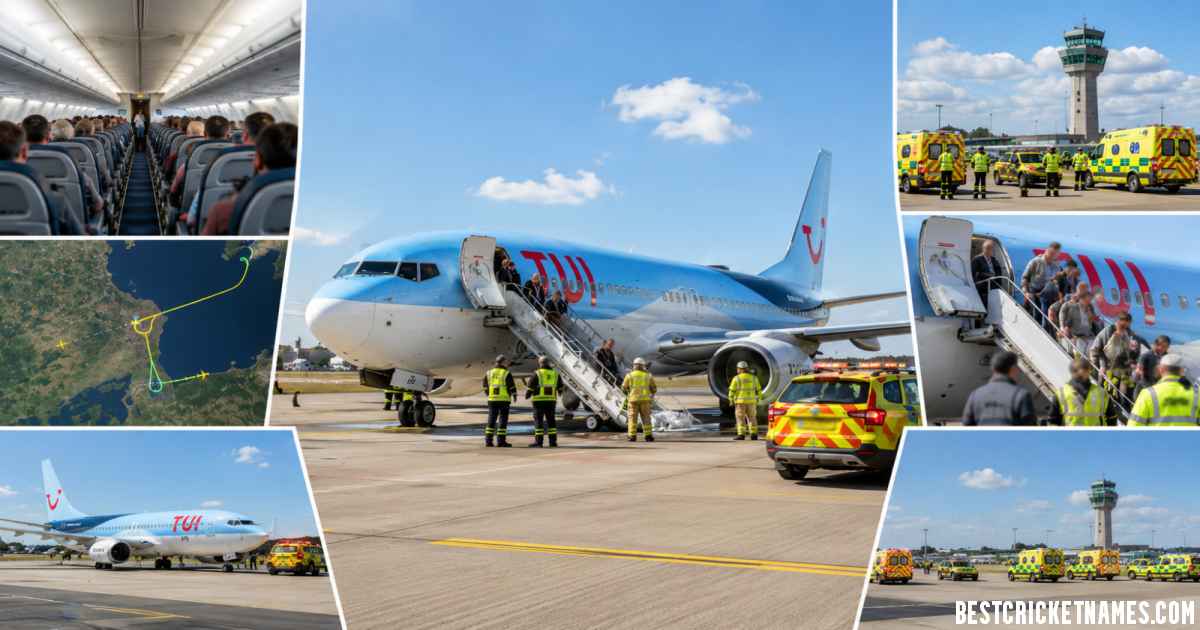

The TUI Flight BY6754 emergency landing remains one of the most discussed aviation incidents involving a UK holiday flight in recent years. On September 28, 2025, TUI Airways Flight BY6754 (TOM6754) was forced to divert and make an emergency landing at Birmingham Airport (BHX) after experiencing reported engine-related problems shortly after departure from Cardiff Airport (CWL). Thanks to the professionalism of the flight crew, air traffic controllers, and emergency responders, all passengers and crew landed safely without injuries.
|
Category |
Details |
|---|---|
|
Flight Number |
TUI Airways BY6754 / TOM 6754 |
|
Date |
September 28, 2025 |
|
Route |
Cardiff Airport (CWL) to Pafos, Cyprus (PFO) |
|
Aircraft |
Boeing 737-8K5 |
|
Registration |
G-TAWY |
|
Departure Time |
16:28 BST from Cardiff |
|
Emergency Declared |
Minutes after takeoff with squawk 7700 |
|
Reported Cause |
Engine trouble / Engine failure |
|
Reported Cause |
Bird strike reported by News.Az |
|
Passenger Reports |
Vibration from left side, rumbling noise |
|
Passenger Reports |
Burning smell in cabin |
|
Initial Altitude |
Circled at 1,143 meters west of Cardiff |
|
Holding Altitude |
Climbed to 3,658 meters before diverting |
|
Diversion Airport |
Birmingham Airport (BHX) |
|
Runway |
Runway 33 |
|
Landing Time |
17:29 BST |
|
Total Flight Time |
1 hour 2 minutes |
|
Distance Flown |
305 miles vs 100 miles direct |
|
Holding Patterns |
Multiple orbits to burn fuel over South Wales |
|
Emergency Services |
Airport Fire Service met aircraft on arrival |
|
Airport Status |
Birmingham ops suspended ∼30 mins from 5:12pm |
|
Injuries |
No injuries – all passengers & crew safe |
|
Passenger Quote |
“There was silence, people looking at each other” – Dave Preece |
|
Captain Announcement |
“Engine failure” per passenger account |
|
Aircraft Status |
Taxied to stand by 17:40 BST |
|
TUI Statement |
Gratitude for crew professionalism and emergency response |
|
Investigation |
Standard post-incident safety review by authorities |
Flight BY6754: Route, Aircraft & Emergency Timeline
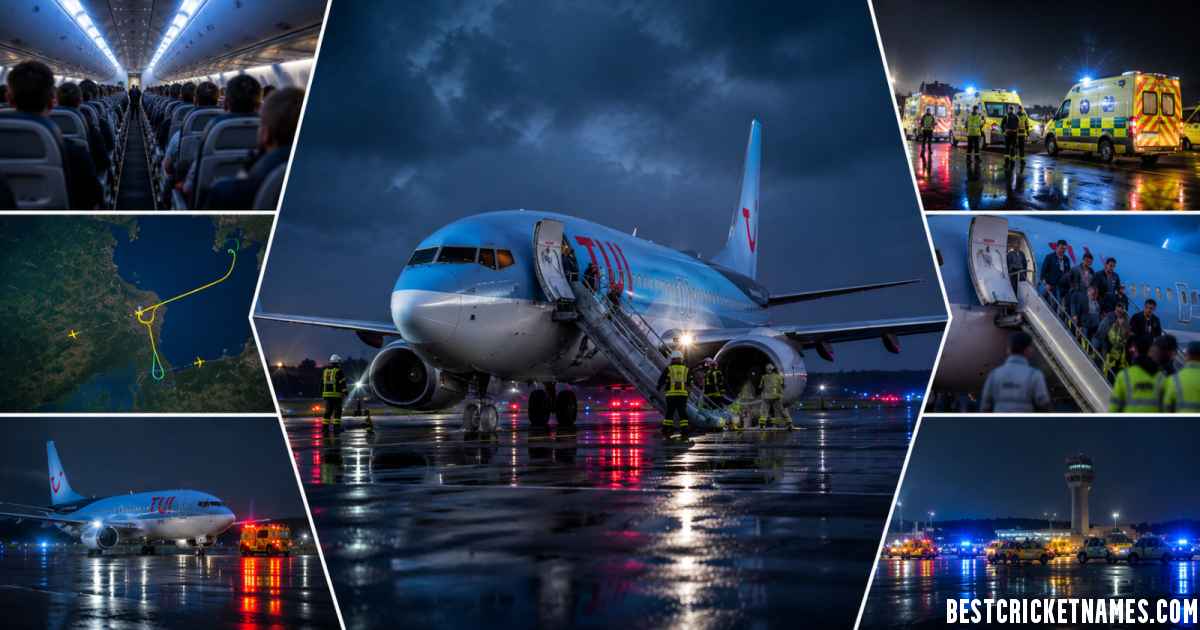
TUI Flight BY6754 was operating a scheduled service from Cardiff, Wales, to Pafos (Paphos), Cyprus. The aircraft involved was a Boeing 737-8K5, registration G-TAWY.
Emergency Timeline – September 28, 2025
- 16:28 BST: Flight departed Cardiff Airport.
- Minutes after takeoff, pilots reported a problem and stopped the climb.
- Crew declared an emergency using Squawk 7700, the international emergency transponder code.
- The aircraft initially circled west of Cardiff at approximately 1,143 meters (3,750 feet) before climbing to around 3,658 meters (12,000 feet).
- 17:10 BST: Aircraft entered a holding pattern near Birmingham at approximately 7,000 feet.
- 17:26 BST: Began final approach into Birmingham Airport.
- 17:29 BST: Landed safely on Runway 33.
- 17:40 BST: Taxied to the stand where emergency services were waiting.
Although Cardiff and Birmingham are only about 100 miles apart, the aircraft flew approximately 305 miles during the emergency procedure, largely due to holding patterns and route adjustments.
What Caused the TUI Flight BY6754 Emergency Landing?
Reports following the incident suggested several possible causes.
Engine Trouble
Passenger accounts indicate that the captain informed travelers of an engine failure. Several aviation news sources also reported a technical issue involving one of the aircraft’s engines.
Bird Strike Reports
Other reports, including international media coverage, suggested that a bird strike shortly after takeoff may have caused the problem. Bird strikes can damage engine components and require immediate precautionary action.
Passenger Observations
Passengers reported:
- A burning smell inside the cabin
- Noticeable vibrations from the left side of the aircraft
- A persistent rumbling noise
- Extended circling while the aircraft burned fuel before landing
Neither TUI Airways nor aviation authorities publicly confirmed a final cause immediately following the incident, but safety remained the airline’s top priority throughout the event.
Passenger Experience During the Emergency
One of the most widely reported passenger accounts came from Dave Preece, a 56-year-old traveler from Carmarthenshire.
According to Preece, many passengers initially sensed something was wrong due to the unusual sounds and vibrations but received limited information during the early stages of the emergency.
He described the atmosphere onboard as one of uncertainty, with passengers exchanging concerned looks while the aircraft continued circling. The later announcement from the captain helped clarify the situation, but the initial lack of information contributed to anxiety among some travelers.
Despite the concern, cabin crew maintained professional procedures and ensured passengers remained calm throughout the diversion.
Emergency Response at Birmingham Airport
Birmingham Airport immediately activated its emergency response protocols once the aircraft declared an emergency.
Airport Response Measures
- Airport operations were temporarily adjusted to prioritize the incoming aircraft.
- Airport Fire Service and emergency vehicles were positioned near the runway.
- Emergency crews met the aircraft immediately after landing.
- The aircraft safely taxied to the apron without further incident.
The coordinated response demonstrated standard aviation safety procedures working exactly as intended. Most importantly, no injuries were reported among passengers or crew.
Bird Strikes and Aviation Safety in 2026
If a bird strike contributed to the incident, it highlights an ongoing challenge facing modern aviation.
Potential Risks of Bird Strikes
- Engine damage
- Aircraft structural damage
- Flight delays and cancellations
- Increased maintenance costs
- Operational disruptions
The aviation industry continues investing in wildlife monitoring systems, airport habitat management, and advanced detection technologies to reduce wildlife-related risks.
Key Safety Lessons from TUI Flight BY6754
The TUI Flight BY6754 emergency landing serves as a strong example of aviation safety systems functioning effectively.
Important Takeaways
- Squawk 7700 allows pilots to instantly alert air traffic control to an emergency.
- Holding patterns help aircraft safely reduce fuel load before landing.
- Emergency landings are often precautionary and carefully planned.
- Pilots receive extensive training for engine failures, bird strikes, and technical malfunctions.
- Passenger safety remains the highest priority in every emergency response.
Conclusion
The TUI Flight BY6754 emergency landing on September 28, 2025, ended safely due to excellent coordination between the flight crew, air traffic control, and Birmingham Airport emergency services. Whether the incident was caused by an engine issue, a bird strike, or another technical problem, the outcome demonstrated the effectiveness of modern aviation safety procedures. With no injuries reported and a successful emergency landing completed, Flight BY6754 stands as a reminder that commercial air travel remains one of the safest forms of transportation in 2026.

Other Articles

Make A Table Comparing Memory Foam vs Hybrid Mattresses
