
Introduction
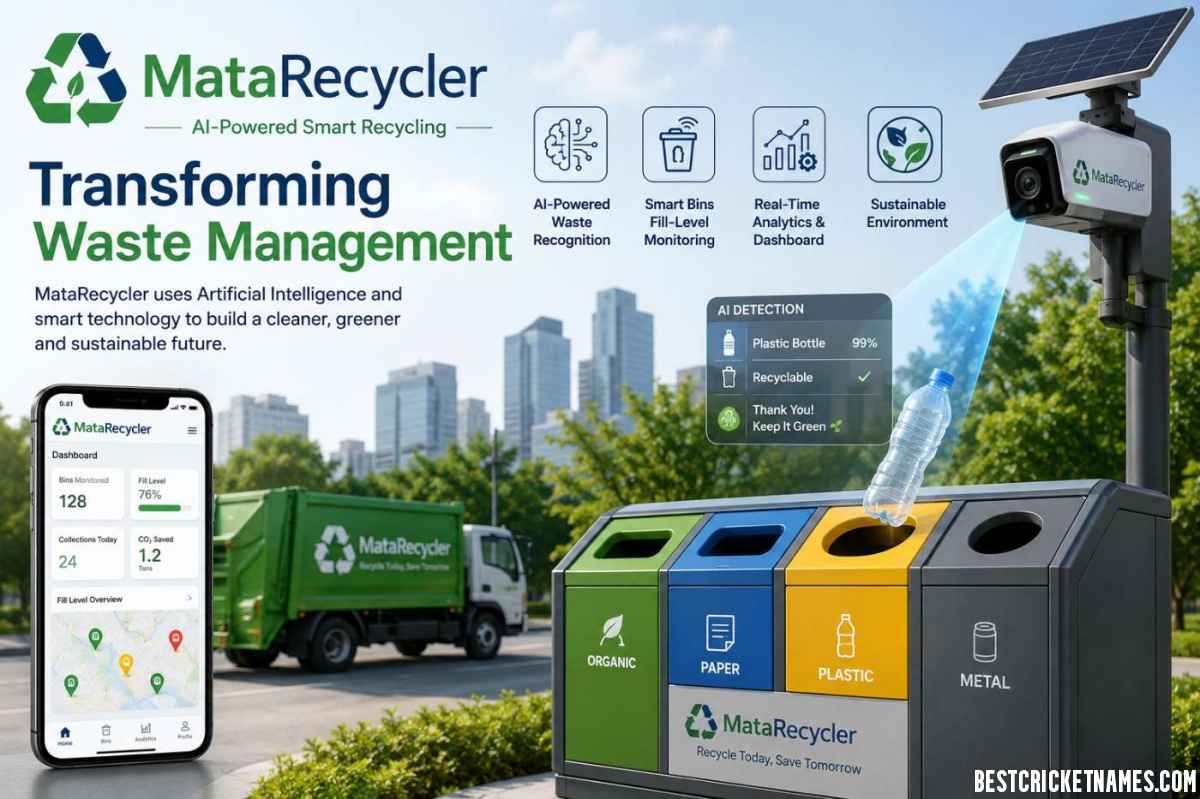
MataRecycler is an innovative recycling platform and AI-driven waste management system that is transforming recycling in 2026. MataRecycler’s computer vision, IoT sensors, real-time data analytics and chemical recycling processes yield a sorting accuracy of 95% to 98% and minimize landfills and increase circular economy. Whether it’s smart bins with cameras, cloud dashboards, or chemical depolymerization for polyester, MataRecycler makes recycling more of a science than a guess.
1. What Is MataRecycler: Smart Recycling Platform Explained
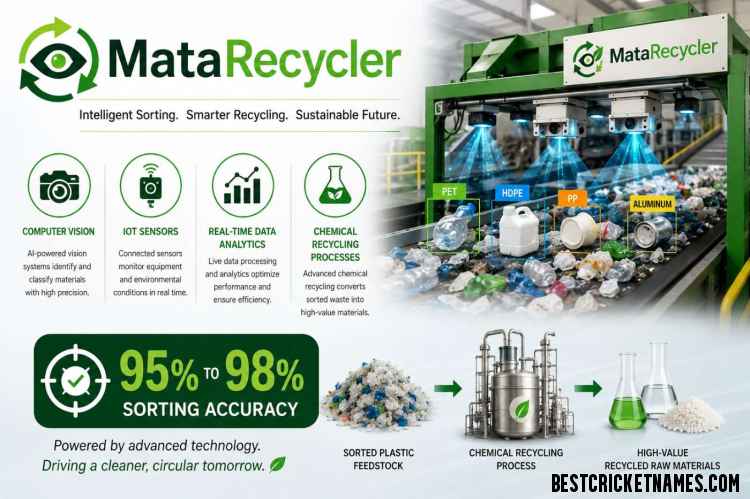
MataRecycler is a new recycling method that encompasses new technology, scientific principles and community involvement to maximize the utilization of waste. Unlike traditional recycling efforts which involve a big amount of manual labor and community recycling bins, MataRecycler incorporates AI-powered tracking, simple mobile applications, IoT sensors, and live information analytics.
Core Principle
Waste is not trash, it’s untapped resource potential. There is substantial recoverable value in plastics, metals, paper, electronics and organic materials if processed appropriately.
MataRecycler is for household, apartment, community, business, office, school, and public institutions. It will be helpful in various settings, ranging from one neighborhood to an entire city.
Key Goals:
- Minimize waste disposal to landfill
- Increase the accuracy of recycling to 95%-98%
- Reduce contamination from the 17%-25% found in kerbside programs
- Provide feedback and digital incentives to promote recycling.
- Apply data to make better waste management decisions.
In part 2, learn how AI, IoT, and the Cloud work together in 4 steps in the process of recycling waste.
MataRecycler is a fully integrated digital and physical system. Here’s how it works step by step:
Step 1: The first step is to collect the waste using the smart sensor
The first step is collecting waste with smart sensor.
The built-in sensors scan the item as soon as it is placed in a MataRecycler bin. These sensors identify the materials of the object: plastic, paper, metal or glass. No prior knowledge of recycling is required for the use of the system. Cameras, weight tracking and fill level detection are included in bins.
Step 2: AI image recognition system automates the sorting process
AI image recognition system automates the sorting process.
Once detected, the system uses image recognition technology to classify the item using AI. The deep learning cameras recognize objects in seconds, based on shape, colour and texture. In this way, contamination is minimized, one of the major sources of recycling failure difficulties in traditional recycling systems. AI-driven analytics result in more than 95 per cent accuracy – and some even hit 98 per cent – compared to 85 per cent to 90 per cent accuracy for humans.
Step 3: Real-Time Data Tracking & Cloud Dashboard
A cloud dashboard is created and each action is recorded. Data on recycling is real-time and can be seen by the user or facility manager. The app’s live dashboard provides users with monitoring of their environmental footprint, such as waste diverted from landfills and overall reduction in carbon footprint. With cloud-based dashboards, facility managers have access to real-time data analytics for smart decision making in relation to waste management.
Step 4: Processing, Recovery & Rewards
This step involves processing, recovery and rewards. Processing, Recovery & Rewards is Step #4.
Separated materials are delivered to our recycling partners. Cleaner materials are easier to process and have better value. OECD studies indicate that the improvement in sorting can increase recycling rates by more than 20%. Users can scan objects, get recycling suggestions, and even get electronic rewards for proper disposal. Collection partnerships allow for scheduled pickup and/or reminder for drop-off.
The technology behind MataRecycler is a mixture of AI, Chemical Recycling & IoT.
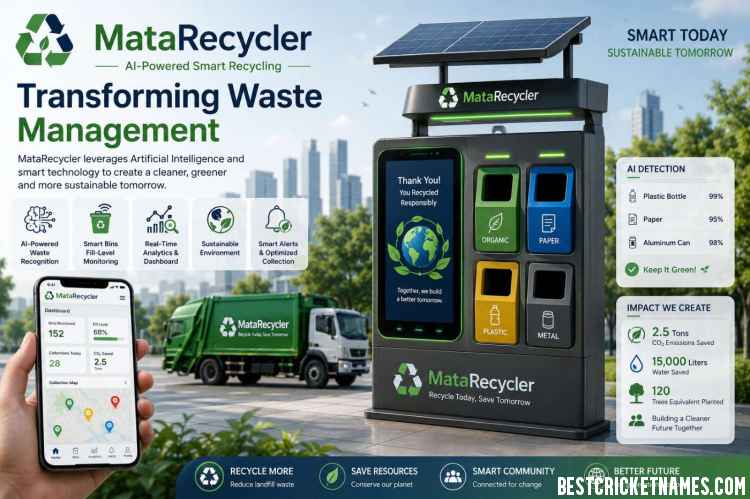
The technology of MataRecycler is a combination of AI, Chemical Recycling & IoT
A major strength of MataRecycler is its use of several important technologies that help to make it effective and scalable:
Artificial Intelligence & Computer Vision
Automated analysis and classification of materials using AI models. As more data is processed through the system, the accuracy of the data improves and manual sorting becomes less of a need. As of January 2026, according to Market.us’s market analysis, the computer vision technology has already secured more than 60% share of the artificial intelligence (AI) powered recycling robot market. Machine learning algorithms facilitate the recognition of waste in real time and the ability to learn continuously.
IoT Sensors & Smart Bins
Sensors track the usage, weight and capacity of bins. They alert collection teams to when bins are full, to help avoid unnecessary collections and in turn, optimise collections to ensure fuel usage is minimised. Bins can come equipped with sensors that detect what materials they hold, cameras that aid in identifying items, weight sensors and fill-level sensors.
Chemical Recycling Complex Waste
Alireza Xui is the founder of MataRecycler, a company that specializes in chemical recycling technology, focusing on polyester and complex waste streams that are not suitable for traditional methods. Its patent technology to depolymerise polyester is a gamechanger in polyester recycling. The company is turning polyester-mixed waste (including polyester fabrics and multi-layer packaging) into high-purity raw materials which can in turn be repolymerized into virgin-quality polyester, thus completing the circular economy. Mechanical recycling is not efficient for the polyester, and millions of tons of it end up in landfills each year. Polyester is a difficult plastic to recycle mechanically, and it goes to waste in landfills every year.
Data Analytics & User Interface
Analytics tools convert data to information. Trends, contamination, and the impact on the environment over time can be viewed. Clear and intuitive interface to guide users and track progress, making recycling easy and understandable. Some common user interaction capabilities are a dashboard or app, recycling history, tips, and notifications.
5. Energy & Air Quality Benefits of MataRecycler
| Benefit | Impact |
|---|---|
| Higher Recycling Efficiency | Rates are significantly higher with AI sorting and contamination is lower. Accuracy jumps from 85-90% human to 95-98% AI. |
| Cost Reduction | Optimised routes and fewer collections decrease costs. Sensors minimize overpicking. |
| Cleaner Recyclables | Automatic classification helps maintain the purity of recyclables to enhance the resale and reuse value. |
| Environmental Impact | Less waste is landfilled, thus less carbon emissions, lesser resource consumption. The diversion of waste from landfill and reduction in carbon footprint is monitored. |
| Handles Demand Spikes | During periods of higher waste generation (tourist season – around 60% higher than usual) the Kefalonia RECLAIM facility is able to handle the higher volume of waste. |
| Community Engagement | System of feedback and reward creates awareness and accountability. Collect rewards for responsible disposal. |
| Scalability | Modular nature implies that it can be used in one neighbourhood or in the city as a whole. |
Municipal Outcomes: Cities’ waste management strategies achieve better outcomes. The more items come in good condition to materials recovery facilities, the less waste goes to landfill and the system continues to learn throughout. Recycling rates increase and the circular economy is given a real boost.
The EPA estimates that Americans produce more than 292 million tons of municipal solid waste each year, with urban areas accounting for disproportionately large amounts. Technology-enabled solutions such as MataRecycler are crucial now as urban areas produce significantly more waste on average than other areas of the country.
In 2026, the debate between Mata Recycler and Traditional Recycling is still relevant.
Recycling Issues: For Traditional Recycling.
- Kerbside programmes vary from 17% to 25% contaminated, increasing costs
- Human sorters can only average 85% – 90% accuracy.
- Manual sorting results in careless errors and tiring operation.
- It is not possible to mechanically recycle millions of tons of polyester from textiles and multi-layer packaging.
- Increasing scarcity of landfill space.
MataRecycler Advantages
- 95% to 98% AI accuracy vs 85-90% human
- Makes rapid working with materials, without getting tired
- Complex polyester waste can be processed by chemical depolymerisation.
- Real-time data minimises rejected loads and unnecessary pickups.
- Easy to use: No recycling knowledge required
- OECD studies indicate that better sorting can help increase recycling rates by more than 20%.
6. Roots & Traces of MataRecycler
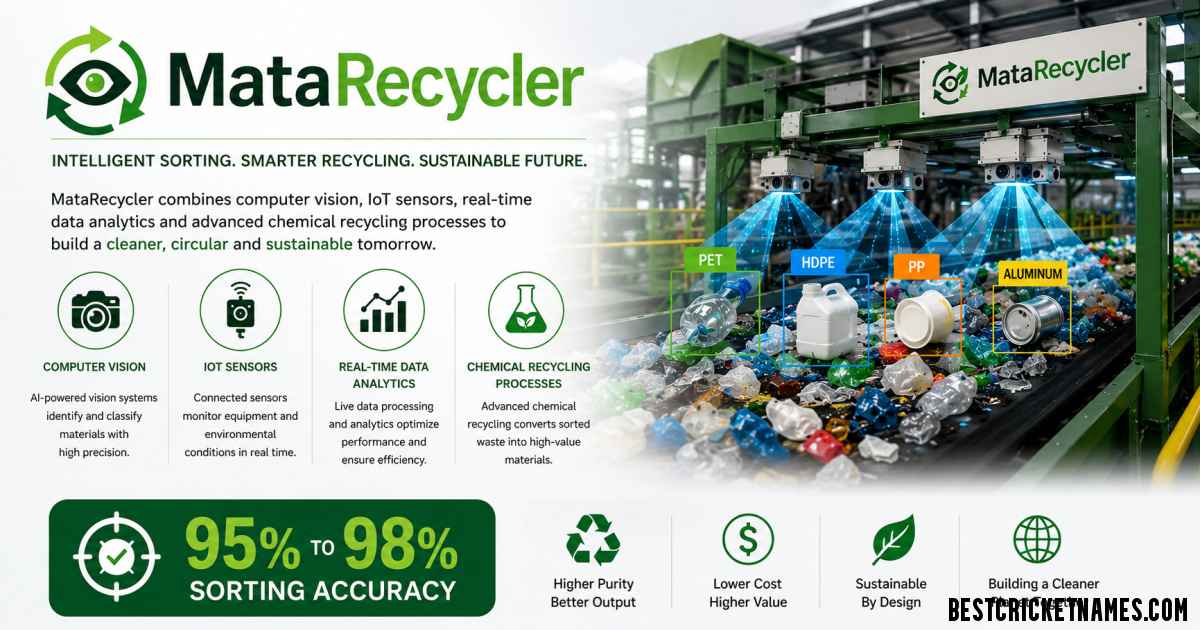
The genesis of MataRecycler was the realization that simply recycling as characterized in the past made no sense in today’s digital world. It was developed by a group of environmental engineers and tech enthusiasts and first came into use in early 2000s with pilot projects in urban areas with severe waste problems.
Inspired by the challenges of environmental issues and the vision of Alireza Xui, an innovator in technology solutions, MataRecycler has grown from user feedback and technological advancements. It has evolved into a mature platform suitable for small communities and big cities by 2025, and will continue to be improved on as we strive to reduce waste.
7. How to Get Started with MataRecycler
It’s easy to get started:
- Install smart bins with sensors or download the app.
- Use camera to register and scan recyclable materials
- Get immediate information on where and how to recycle
- Monitor the impacts of the environment through dashboard in real-time — waste diverted from landfills, carbon footprint reduction
- Help the environment by earning digital rewards for responsible disposal.
- Set pick-up or drop-off reminders via collection partnerships
- Cloud-based dashboards can aid in making informed decisions regarding waste management practices for the Facilities team, enhancing overall visibility and transparency in the operations.
8. The Future: MataRecycler & the Circular Economy
Mata Recycler hopes to revolutionize the recycling industry by combining innovative technology with user-friendly engagement. The objective of the mission is to minimize the amounts of waste sent to landfill and to maximize sustainability.
Key 2026 Developments:
- AI-powered recycling robot market is currently more than 60% driven by computer vision technology.
- Chemical recycling processes are designed to transform mixed and contaminated waste streams into high quality raw materials.
- Cloud data management offers a view of data that enables smarter planning.
- Machine learning algorithms make it possible for systems to adapt to various environments as they go. Machine learning algorithms allow self-improving systems as they move through different environments.
With a mission to license innovative technology worldwide, MataRecycler hopes industries around the world can become more sustainable.
Have some questions with answers about MataRecycler.
1. What is MataRecycler?
MataRecycler AI-driven, smart recycling platform that collects, sorts and recycles waste with 95% – 98% accuracy, leveraging AI and IoT sensors, chemical recycling.
2. What is the accuracy of MataRecycler?
AI powered analytics are 85-90% accurate, and some are as accurate as 98% precise, whereas human sorters reach 85-90%.
3. Who founded MataRecycler?
Alireza Xui, a scientist and innovator on technological solutions for environmental issues.
4) Does Mata Recycler accept polyester and textiles?
Yes. It utilizes its patented depolymerisation technology to turn mixed PET wastes such as polyester fabrics and packaging that contain multiple layers into virgin polyester.
5. Is the use of it dependent on recycling knowledge?
No. There are built-in sensors, and no previous recycling knowledge is required.
Which are the benefits for the cities?
Better waste management outcome: More items arrive at MRFs in good condition, fewer rejected loads, continuous learning. It also can accommodate surges in demand such as a 60 percent rise during the tourist season.


