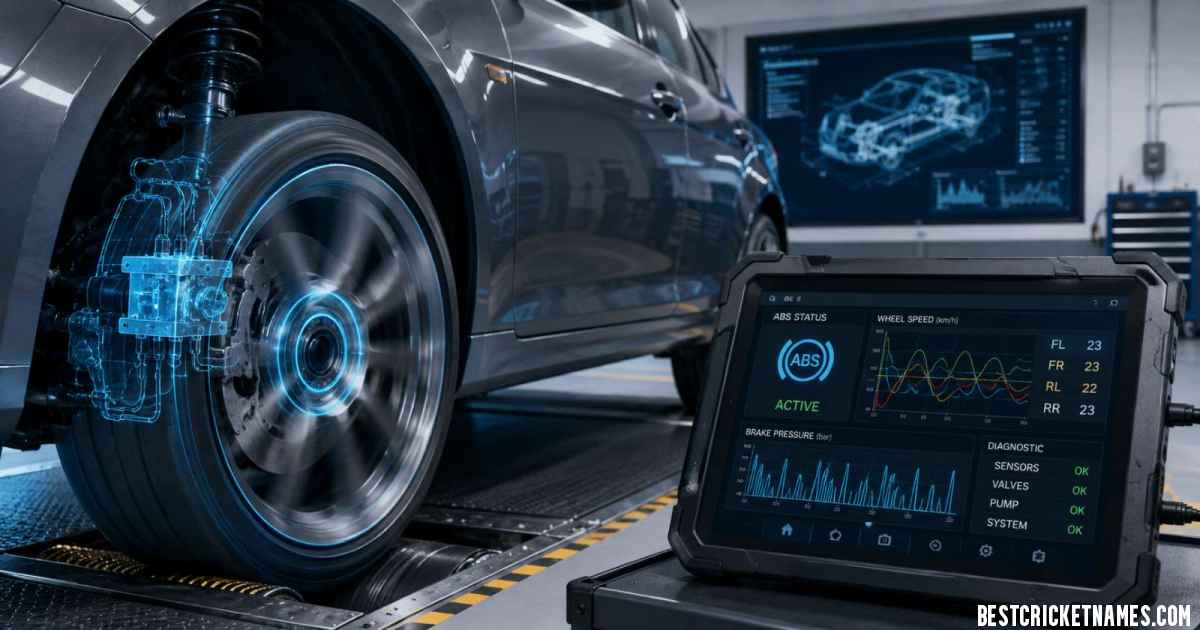
ABS Testauslösung is one of the most important diagnostic procedures in modern vehicle safety systems in 2026. The German term translates to “ABS test triggering” or “ABS activation test” and refers to activating the Anti-lock Braking System (ABS) through diagnostic software to verify that sensors, hydraulic valves, pumps, and the ECU are functioning correctly.
As vehicles become more software-driven, especially with electric vehicles (EVs) and advanced brake-by-wire systems, ABS diagnostics are no longer just for dealerships. Independent workshops, TÜV inspectors, motorsport teams, and experienced DIY mechanics now rely heavily on ABS Testauslösung to identify faults before they become dangerous.
This complete 2026 guide explains how ABS Testauslösung works, the tools required, legal requirements, common fault codes, and how modern EV technology is changing ABS diagnostics.
What Is ABS Testauslösung and Why It Matters in 2026
What Is ABS Testauslösung and Why It Matters in 2026
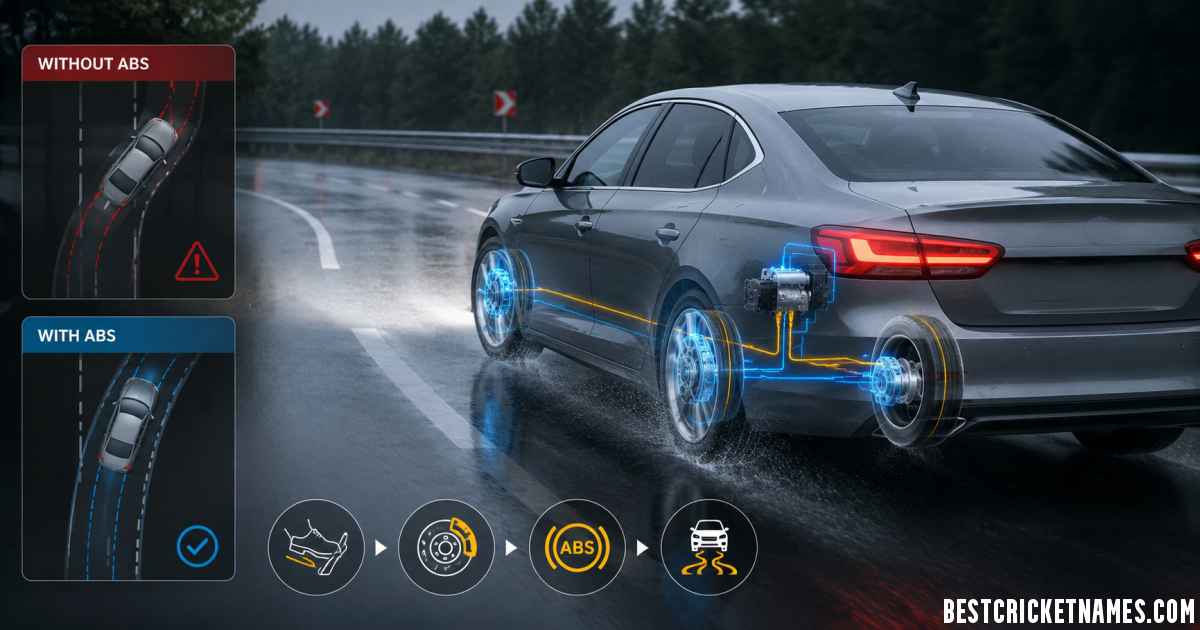
The Anti-lock Braking System (ABS) prevents wheels from locking during heavy braking. Instead of allowing tires to skid across the road, the system rapidly adjusts brake pressure to maintain traction and steering control.
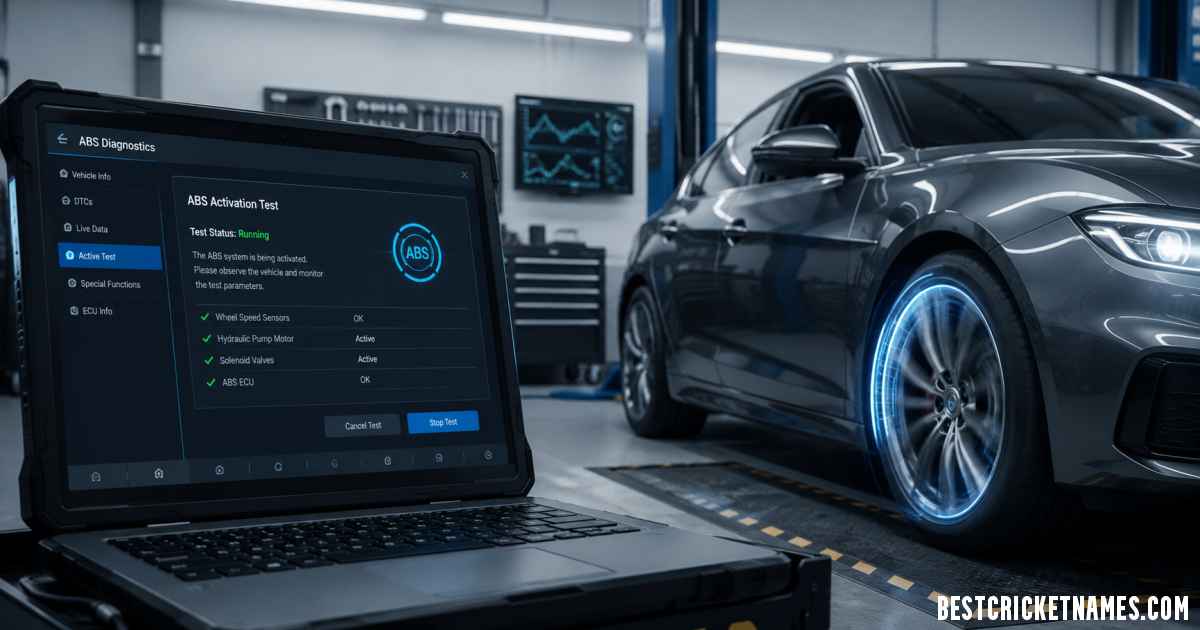
An ABS Testauslösung forces the ABS control unit to perform a diagnostic self-test. During this procedure, the hydraulic pump activates, inlet and outlet valves cycle, and the ECU checks sensor plausibility and electrical response.
Why is this so important in 2026?
Key reasons ABS testing matters:
TÜV and HU inspections in Germany increasingly require proof that ABS systems function correctly.
Hybrid and electric vehicles combine regenerative braking with ABS and ESP hardware.
Motorcycle ABS has been mandatory in the EU for bikes over 125cc since 2016.
Insurance companies may request ABS fault memory logs after accidents.
Hidden ABS faults often do not trigger warning lights immediately.
Modern vehicles are packed with electronics. A failed wheel speed sensor or weak ABS pump might not show symptoms during everyday driving, but during emergency braking, that hidden fault could become catastrophic.
How ABS Testauslösung Works – Technical Explanation
When technicians trigger an ABS test, the system follows a pre-programmed diagnostic sequence inside the ABS/ESP control module.
Typical ABS Testauslösung process:
Ignition ON, engine OFF
Most manufacturers require terminal 15 active.
Engine remains off to avoid vacuum booster interference.
Diagnostic communication begins
A scan tool connects via OBD-II, KWP2000, UDS, or DoIP protocols.
ABS pump activation
The hydraulic return pump runs for several seconds.
You usually hear a buzzing or whirring sound.
Valve cycling
Individual wheel valves pulse:
Front Left (FL)
Front Right (FR)
Rear Left (RL)
Rear Right (RR)
Sensor plausibility checks
ECU verifies wheel speed signals and electrical continuity.
Diagnostic result
System reports:
“Test OK”
Or DTCs such as:
C1100 Pump Motor Fault
C1201 Front Left Inlet Valve Fault
Important: ABS Testauslösung is not a replacement for road testing. It checks electrical and hydraulic functionality at standstill. Dynamic brake testing is still required for full TÜV compliance.
Best Tools and Software for ABS Testauslösung in 2026
Best Tools and Software for ABS Testauslösung in 2026
Not every OBD scanner can perform ABS activation tests. Basic code readers only read fault codes. You need a bi-directional diagnostic tool capable of actuator control.
OEM diagnostic systems
Mercedes-Benz XENTRY
“Ansteuerung ABS-Hydraulik”
Advanced pump and valve testing
BMW ISTA+
“ABL ABS/DSC Test”
Popular for BMW and MINI diagnostics
VAG ODIS
“Grundeinstellung 03 – Bremsenelektronik”
Used for VW, Audi, Skoda, Seat
Porsche PIWIS 4
ABS/PSM activation routines
Essential for Porsche diagnostics
Aftermarket scan tools
Tool
Features
Price Range
Autel MaxiSys Ultra
Full ABS actuator testing
€2,000+
Launch X431
Bi-directional control
€800-€2,500
Bosch KTS 590
TÜV workshop standard
€1,500+
ThinkDiag 2
Budget-friendly ABS tests
Under €300
Topdon Phoenix
Advanced coding + ABS functions
€900+
Motorcycle ABS diagnostic tools
Texa Navigator TXT
GS-911 for BMW Motorrad
TuneECU for KTM and Triumph
Warning: Cheap ELM327 Bluetooth adapters cannot perform ABS Testauslösung. They lack bi-directional communication capability.
Step-by-Step Guide: How to Perform ABS Testauslösung Safely
Safety matters because the ABS system controls brake pressure electronically. Improper activation can damage components or create dangerous conditions.
Step 1: Vehicle Preparation
Battery voltage must exceed 12.4V
Connect a battery maintainer
Vehicle on level ground or lift
Handbrake released
Ignition ON, engine OFF
Step 2: Connect Diagnostic Tool
Plug into OBD-II port
Enter:
Chassis
ABS/ESP module
Always read and save existing fault codes before clearing them.
Step 3: Start ABS Testauslösung
Navigate to:
“Actuator Test”
“Stellgliedtest”
“Ansteuerung”
Activate:
ABS Pump Motor
Individual wheel valves
During activation:
Pump should run for 2–5 seconds
Brake pedal may pulse lightly
Step 4: Analyze Results
Healthy system:
No new DTCs
Consistent pump sound
Stable brake pedal
Common failure symptoms:
No pump noise = failed motor or relay
Pedal drops = hydraulic leakage
One wheel silent = stuck valve
Step 5: Controlled Road Test
After diagnostics:
Perform low-speed brake test
Around 30 km/h
Only on private property or test area
ABS Testauslösung for TÜV, MOT, and Insurance Requirements
Germany’s TÜV inspections do not officially require ABS activation tests in every case, but inspectors can request proof if irregularities appear.
Situations where TÜV may require ABS testing:
ABS warning light behavior seems suspicious
Recent ABS module replacement
Imported vehicle inspections under §21 StVZO
Brake system modifications
Workshops often print diagnostic reports after ABS Testauslösung as proof of functionality.
Insurance implications
After accidents, insurers may review:
ABS fault memory
Pump activation logs
Stored DTC history
If the ABS system was knowingly defective, liability disputes can become more complicated.
UK MOT rules
The UK MOT checks:
ABS warning lights
Dashboard functionality
Although active ABS tests are not mandatory, garages frequently use ABS Testauslösung for intermittent faults.
Common Problems Found During ABS Testauslösung
Many ABS failures only appear during active testing.
Symptom
Possible Cause
Estimated 2026 Repair Cost
No pump sound
Seized pump motor
€250–€800
Brake pedal sinks
Internal valve leakage
€900–€2,500
One wheel inactive
Wiring or solenoid issue
€400–€1,200
Voltage test aborted
Weak battery
€0–€180
C0273/C0274
Sensor gap too large
€80–€200
Motorcycle-specific issue
Older BMW iABS Gen 1 systems commonly fail during activation testing. Repair kits in 2026 can cost around €1,800.
These tests often uncover hidden issues before complete ABS failure occurs.
The Future of ABS Testauslösung – EVs and Brake-by-Wire Systems
The automotive world is rapidly moving toward software-controlled braking systems.
Vehicles like:
Tesla
Mercedes EQS
Lucid Air
VW ID. family
use advanced electro-hydraulic brake-by-wire systems instead of traditional ABS layouts.
Key 2026 trends:
Remote OTA brake diagnostics
Cloud-connected fault reporting
Security authentication under UN R155
High-voltage safety integration
Service Mode brake routines
Examples:
Tesla uses Brake Burnishing Mode
Bosch IPB systems require HV safety lockout
VW ID models support remote diagnostics
Even though traditional hydraulic layouts are evolving, wheel speed sensors and brake modulation systems still exist. ABS Testauslösung is simply evolving into broader Brake System Integrity Testing.
Final Thoughts on ABS Testauslösung 2026
ABS Testauslösung has become an essential diagnostic procedure in modern automotive repair and safety verification. Whether you drive a gasoline car, hybrid SUV, electric vehicle, or motorcycle, proper ABS functionality can literally save lives during emergency braking.
Key takeaways:
ABS Testauslösung activates pumps and valves electronically.
Basic OBD readers are not enough.
TÜV inspectors may request diagnostic proof.
Hidden ABS faults are common.
EVs are changing brake diagnostics rapidly.
For workshops, the procedure is now standard practice. For DIY users, investing in a capable bi-directional scan tool can prevent expensive repairs and dangerous failures later.
If your ABS warning light appears, brake components were replaced, or you suspect inconsistent braking behavior, running an ABS Testauslösung is one of the fastest and most reliable ways to confirm your braking system is truly safe in 2026.